
Fuji Honing
Contents
show more

Source: Fuji Honing official website
https://www.fujihoning.co.jp/en/index.html
https://www.fujihoning.co.jp/en/index.html
For automotive and precision component makers · Fuji Honing
Custom-built honing machines from a specialist founded in 1949
Fuji Honing Industrial builds only honing machines, and it configures each one around the customer's part and line. Shortlist it when an engine or other precision part needs a honing machine specified to your bore, spindle count and automation, from a compact manual machine to multi-spindle lines.
What to know first
- Every machine is built to order. The model name fixes the bore class and maximum stroke; spindles, expansion method, gauging and loading are specified for your part.
- The lineup runs from φ1.8 mm bores on the manual FK-8A and the servo-driven FS series up to φ150 mm on the largest MRX/MRNX and MR/MRN machines.
- The MRX/MRNX adds a spindle shift function for lines that handle parts with different bore positions.
- Fuji Honing lists Maruti Suzuki, Suzuki Motor Gujarat, Honda and Hyundai operations in India among its major clients.
- The website shows no India office; sales offices are in Japan and Nanjing, China, so confirm the service route before ordering.
Is Fuji Honing a fit for your honing project?
Fuji Honing designs the machine around the production requirement rather than selling a fixed catalogue model. That suits projects where the part and line layout are already defined and need a matching machine.
A stronger fit when...
- The part is an engine component such as a cylinder bore or connecting rod, areas Fuji Honing has engineered for since the 1970s and 1980s.
- The line needs multiple spindles, automatic loading, in-process sizing or measurement feedback specified together.
- Several parts with different bore positions must run on one machine.
- Small bores from φ1.8 mm must be honed with servo control and less reliance on operator skill.
- Your OEM customer already uses Japanese honing equipment and expects a similar process.
Confirm carefully when...
- You need an off-the-shelf machine quickly, because each machine is configured to order.
- The bore is larger than φ150 mm or the stroke is longer than 450 mm.
- The quotation depends on published cycle times or accuracy figures, which the website does not provide.
- Power supply, machine height or installed weight must be fixed early; published figures cover a minimum single-spindle configuration only.
- Fast on-site service in India is a deciding factor.
Technologies that set Fuji Honing machines apart
Fuji Honing's strengths sit in how the machine is configured: servo drives, a choice of stone expansion methods and a long customization menu covering sizing, loading and tool changing.
Key technologies and what they change on the line
| Technology | Where it is offered | What it changes |
|---|---|---|
| Spindle shift | MRX/MRNX series | Moves the spindle to the bore position, so parts with different bore layouts can share one machine; confirm the shift range for your part family |
| Stone expansion method | MRX/MRNX and MR/MRN series | Mechanical, hydraulic, double hydraulic or mechanical plus hydraulic, chosen for the stock removal and finish required |
| Three-axis servo control | FS series | Rotation, reciprocation and stone expansion are all servo-driven, and the screen shows the actual diameter instead of a coordinate value |
| Measurement feedback | FS series; MRX/MRNX customization menu | Honing is corrected from measurement results, and the FS also adjusts offsets from predicted measurement trends |
| Sizing and tool changing | MRX/MRNX customization menu | Air sizing, plug sizing, automatic master, automatic tool changer and automatic jig changer for mixed or random production |
| IoT preventive maintenance | FS series (expansion-load monitor standard, IoT system optional) | Tracks tool expansion load, drive units, coolant temperature and coolant concentration to catch problems before a stoppage |
The MRX/MRNX customization menu also lists plateau machining, horizontal-bore honing, robot and gantry loading, rotary tables and conveyor or pallet transfer. Ask which options have been supplied for parts similar to yours.
References: MRX/MRNX series · MR/MRN series · FS series
Device capabilities and manufacturer support requirements vary from business to business, differing for precision components, large components and heavy industry, and component repair and processing.
We have carefully selected the honing machines that are best suited to companies based on the features and challenges of their varied businesses, freeing them from needing to rely on specific operators. Please use the information on this site in your comparisons and deliberations.
Fuji Honing honing machine lineup
Compare the four series by bore size and production style. Click MRX/MRNX or FS to jump to the detailed specifications.
Fuji Honing series selection overview
| Series | Published range | Best starting use case | Point to verify |
|---|---|---|---|
| MRX/MRNX | Max. bore φ25–φ150 mm by model Max. stroke 250–450 mm |
Flagship for production lines that need spindle shift, multiple axes and automation | Number of spindles, shift range and sizing method |
| MR/MRN | Max. bore φ25–φ150 mm by model Max. stroke 250–450 mm |
Servo-driven production machines with ball-screw reciprocation, for lines that do not need spindle shift | Whether the part mix needs the MRX/MRNX shift function instead |
| FS series | φ1.8–φ50 mm Stroke 300 mm |
Small-bore honing in a compact footprint, from single machines to automatic lines | Spindle count, measuring equipment and IoT option scope |
| FK-8A | φ1.8–φ67 mm Stroke up to 178 mm |
Manual honing for high-mix, low-volume work, repair and prototypes | Whether manual operation meets the tolerance and output target |
Fuji Honing's history page also lists FQ and MRB series developed in 2022, but the English website has no product pages for them. Ask whether they are offered for export.

Flagship production series
MRX/MRNX series: spindle shift for multi-part production lines
The MRX/MRNX is Fuji Honing's high-performance model. The model number shows the bore class and stroke, and the rest is built to order: spindle shift, multiple axes, CNC control and automatic tool or jig changers can be combined for the line.
Max. bore diameterφ25 mm (MRX-125) to φ150 mm (MRX/MRNX-745)
Max. stroke250 mm to 450 mm
Stone expansionMechanical, hydraulic, double hydraulic or mechanical + hydraulic
Spindle driveServomotor rotation, 0.75–5.5 kW by model
Measurement and sizingOptional: air sizing, plug sizing, measuring equipment, result feedback
Power specificationsContact Fuji Honing (not published)
MRX/MRNX model specifications
| Model | Max. bore | Max. stroke | Max. spindle speed | Height / floor space (W × D) | Approx. weight |
|---|---|---|---|---|---|
| MRX-125 | φ25 mm | 250 mm | 2,000 min⁻¹ | 2,200 mm / 1,000 × 1,500 mm | 2,000 kg |
| MRX/MRNX-225 | φ50 mm | 250 mm | 1,000 min⁻¹ | 2,600 mm / 1,100 × 1,600 mm | 3,000 kg |
| MRX/MRNX-325 | φ75 mm | 250 mm | 800 min⁻¹ | 2,700 mm / 1,200 × 1,800 mm | 3,500 kg |
| MRX/MRNX-335 | φ75 mm | 350 mm | 800 min⁻¹ | 2,900 mm / 1,200 × 1,800 mm | 4,000 kg |
| MRX/MRNX-545 | φ100 mm | 450 mm | 800 min⁻¹ | 3,500 mm / 1,400 × 2,100 mm | 5,000 kg |
| MRX/MRNX-745 | φ150 mm | 450 mm | 400 min⁻¹ | 4,000 mm / 3,000 × 2,500 mm | 10,000 kg |
Height, floor space and weight are for a single-spindle machine in its minimum configuration, excluding other equipment. The MR/MRN series uses the same model sizes and published values. Configured machines will differ, so confirm installation data with the quotation.
References: MRX/MRNX specifications · MR/MRN specifications

Small-bore series · GOOD DESIGN AWARD 2021
FS series: servo-driven honing for bores from φ1.8 mm
The FS series was developed in 2020 for small-diameter honing. A new spindle drive with 30% lighter moving parts raises reciprocating speed, and the machine needs no hydraulic unit. Fuji Honing reports 33% less energy use and 70% less floor space than its conventional machines.
Bore diameterφ1.8–φ50 mm
Honing stroke300 mm
Spindle speed / reciprocation3,000 min⁻¹ · 30 m/min
Servo axesRotation, reciprocation and stone expansion
Measurement feedbackDirect feedback from measurement, plus automatic offset from predicted trends
Floor space (W × D)1,600 × 700 mm
Machine heightContact Fuji Honing (not published)
Power specificationsContact Fuji Honing (not published)
The operator screen combines every step from set-up to honing, shows the actual bore diameter and illustrates measured shape. A stepless tool exchange system simplifies set-up. Multiple spindles and measuring equipment for automatic lines are available as options.
Reference: FS series
FK-8A: the manual machine behind Fuji Honing's lineup
Fuji Honing's machine history started with the FK-8A, and it remains in the lineup after many revisions. It is a manual machine for high-mix, low-volume work, useful for toolrooms, repair and prototype bores alongside production lines.
Bore diameterφ1.8–φ67 mm
Max. stroke178 mm (varies with bore size)
Spindle speed250–1,500 min⁻¹, continuously variable
Size and weight1,150 mm high · 616 × 500 mm · 200 kg
Reference: FK-8A
Track record: what the client list and history show
Fuji Honing does not publish application case studies. Its client list and development history show where its machines are used.
Major clients listed in India
- Maruti Suzuki and Suzuki Motor Gujarat
- Honda India and Honda Cars India
- Hyundai India
- Mitsubishi Heavy Industries India and Yanmar India
The same list includes carmakers and suppliers in China, Korea, Southeast Asia, the Americas and Europe.
Development milestones
- 1968: in-process air sizing introduced
- 1975 and 1982: engineering for two-stroke and four-stroke engines
- 1985: connecting-rod engineering
- 1987–1990: CNC honing machine, adaptive controller and automatic tool changer
- 2020: FS series for small bores
The client list does not state which machines, parts or results each customer uses. Ask Fuji Honing for a reference installation or a test honing result on a part similar to yours.
References: Major clients · Company history
Support for buyers in India: what is established and what to confirm
What is already established
- Manufacturing
- Tsuchiura Factory, Ibaraki, Japan (ISO 9001 and ISO 14001)
- Sales offices
- Japan, and Nanjing Fuheng Machinery Co., Ltd. in China (opened 2021)
- India office
- None listed on the official website
- After-sales scope
- Repair, retrofit and after-service for honing machines, plus tools, parts and honing stones
- Parts supply
- Consumables and service parts by part number, and repair parts made to customer specification
Confirm these points before issuing a purchase order
- Who installs, commissions and services the machine in India, and from which country?
- What are the target response and site-visit times for your plant?
- Which honing stones, tools and spare parts can be stocked locally, and what is the lead time from Japan?
- Can test honing be run on your part in Japan before the order, and what report will you receive?
- What do the warranty, operator training and remote support cover?
- Can existing Fuji Honing machines in your plant be retrofitted rather than replaced?
References: Sales offices · Corporate information · Stones and tools
Information to prepare before test honing or a quotation
Fuji Honing specifies each machine from the enquiry, so the brief should describe the part, the line and the result required.
- Part drawing, bore positions and datum definition
- Material, heat treatment and hardness
- Incoming bore size, stock allowance and variation
- Final size tolerance, roundness, cylindricity and straightness
- Surface finish or plateau requirements and the measurement method
- Monthly volume, target cycle time and number of part variants
- Required spindles, sizing method and loading or transfer system
- Floor space, power supply, coolant conditions and required inspection records
Mark any requirement that is not yet fixed as open. This stops a provisional assumption from being read as an agreed machine capability.
Company profile
| Company name | Fuji Honing Industrial Co., Ltd. |
|---|---|
| Established | 1949, Osaka, Japan |
| Head office | 7F Nakameguro GT Tower, 2-1-1 Kamimeguro, Meguro-ku, Tokyo 153-0051, Japan (per the October 2021 relocation notice) The sales office page lists the head office at the Tsuchiura Factory; confirm the current address with Fuji Honing. |
| Factory | 2-7-41 Kawaguchi, Tsuchiura-shi, Ibaraki 300-0033, Japan Telephone: +81 29 821 2623 |
| Group | NKC group (Nakanishi Metal Works Co., Ltd.) |
| India office | Not listed on the official website |
| Website | https://www.fujihoning.co.jp/en/index.html |
[Advertisement]
Top Three Honing Machines
That Free You from Reliance on Individual Operators
Top Three Honing Machines
That Free You from Reliance on Individual Operators
BS-VI standards and growing EV demand are driving unprecedented needs for precision machining.
While the "overseas components + local assembly" model keeps initial costs low, design mismatches and unclear accountability create long-term risks.
Integrated management from design to assembly ensures consistent machining accuracy regardless of operator, minimizing material loss, accelerating ROI, and building the foundation for global trust.
Advertiser Disclosure:
We receive compensation from some of the companies listed below.This compensation may affect which companies are included and the order in which they appear.
For
precision component suppliers
precision component suppliers
G Series
NISSIN ProSOL
NISSIN ProSOL
Source: NISSIN ProSOL official website https://mktg.nissin-mfg.co.jp/product/gseries/
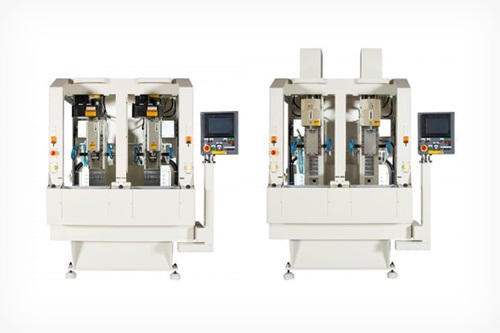
This honing machine synchronizes stroke and stone expansion in 0.01 μm increments, enabling precision honing of holes as small as 3 mm in diameter and 80 mm deep, even in hard materials.
Automatic electronic control and made-to-order jigs reproduce the techniques of veteran operators.
These honing machines eliminate deviations in the manufacturing of precision components such as control valves while also reducing personnel costs.
| Bore Diameter |
⌀3~⌀100 |
|---|---|
| Workpiece Length |
130mm |
| Spindle Stroke Length |
Max. 300mm |
Main Applications
Gears / Connecting rods / Hydraulic valves, etc.
For
large components and heavy industry
large components and heavy industry
VL Series
Nagel
Nagel
Source: Nagel official website https://nagel.com/en/products/honing/honing-machines/tube/
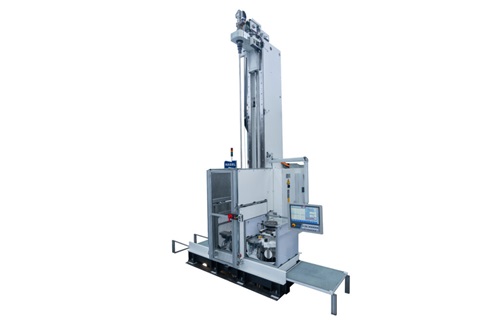
Machine height can be reduced through pit installation, reducing the footprint and using less volumetric space. It also makes it easy to mount and unmounts heavy objects such as engine blocks, reducing the operation workload.
They can even cut the large machining allowances unique to heavy industry in short amounts of time.
| Bore Diameter |
~⌀350 |
|---|---|
| Workpiece Length |
3,800mm |
| Spindle Stroke Length |
Not specified on official website |
Main Applications
Long pipes and tubes / Piston rods / Heavy workpieces / Exterior diameter processing, etc.
For
parts repairs and processing-on-consignment
parts repairs and processing-on-consignment
SV Series
Sunnen
Sunnen
Source: Sunnen official website https://sunnen.com/products/sv-15-vertical-honing-machine
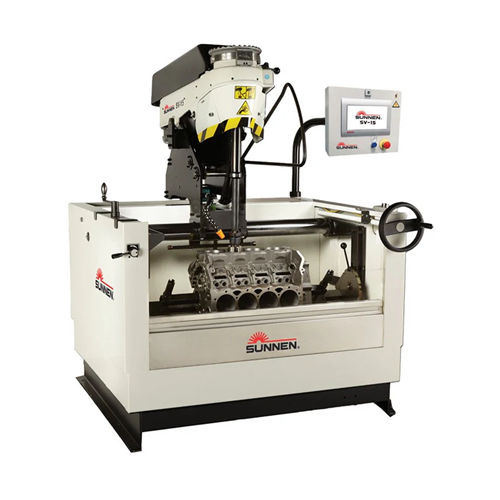
A graph showing the status of the hole being honed is displayed on-screen, in real time. This makes it easy to visually understand where the workpiece is and how it is warped, accelerating repair decisions.
These systems can store up to 100 processing settings at any time. They can also be backed up via USB, so even for small-lot, high-mix jobs, you can instantly reproduce the same processing as in previous jobs. They also shorten set-up times.
| Bore Diameter |
~⌀203 |
|---|---|
| Workpiece Length |
279mm |
| Spindle Stroke Length |
~225mm |
Main Applications
Engine blocks, etc.