
Advanced Honing Navigator │ Choose the Ideal Honing Machine » Types of honing machine » High Precision Honing Machines
High Precision Honing Machines
Contents
show more
In fields with high precision standards, such as the OEM and aerospace fields, standard honing machines may not be able to achieve the results that are required. This page explains how high-precision honing machines work, how to choose the right one for you, and the benefits they offer. It also provides a list of products.
What are high-precision honing machines, and how do they work?
High-precision honing machines are ultra-high-precision machines in which every mechanism is optimized to achieve nano- or submicron-level circularity, cylindricality, and surface roughness. Unlike standard CNC honing machines, which are focused on mass production speed, with high-precision honing machines, the main design priority is maintaining dimensional accuracy.
The keys to high precision are a head structure that prevents thermal displacement, high-precision spindle rotation control, and expansion pressure control using high resolution sensors. These machines can be linked to measurement systems and their cooler chillers can be managed to maintain a high level of precision even when processing over long periods of time.
Advantages of using high-precision honing machines
Meeting the exacting precision standards of European and North American OEMs and the aerospace industry
One of the advantages of high-precision honing machines is that they minimize deviations in circularity, cylindricality, and surface roughness, so they can meet high quality standards. Their structures minimize thermal displacement, and their submicron-level cutting control keeps dimensional variation during processing to negligibly low levels. Even in mass production processes for European or North American OEMs, or the aerospace industry, which have strict CPK requirements, these machines make it easy to maintain high levels of quality and reproducibility.
Quality stabilization for ultra-small diameter holes (on the order of several millimeters) and holes with complex shapes
One of the advantages of high-precision honing machines is that, because they precisely control honing stone expansion and stroke length, they produce consistent levels of circularity, cylindricality, and surface quality even for small diameter holes, where standard machines tend to produce inconsistent results. They make it easy to produce high quality finishes even for ultra-small diameter holes, such as those in fuel injection nozzles and precision hydraulic valves, where standard machines struggle with honing stone control.
Disadvantages of using high-precision honing machines
Demanding installation environment requirements and high maintenance costs
One of the disadvantages of high-precision honing machines is that their high price tags come with high maintenance costs. Maintaining their accuracy requires strict temperature management (a temperature-controlled room) and regular advanced calibration, so running costs after installation must also be taken into consideration.
Main applications of high-precision honing machines
- Aerospace components (hydraulic actuators, etc.)
- Medical devices (precision syringes, etc.)
- Fuel injection device injectors
- Precision hydraulic and pneumatic valves
- High performance compressor components
- High efficiency precision pumps for use in agriculture or industry, etc.
How to choose a high-precision honing machine
When it comes to picking a high-precision honing machine, just checking processing diameters and strokes isn't enough. Another important factor is whether or not they can maintain that high level of precision. A key point is whether there are local engineers that can perform precise calibration and offer high-level technical support. These will affect your ability to maintain high levels of precision over the long haul.
One standard for maintaining precision is whether or not you can compare not only machine performance specs, but also support levels.
This site presents a carefully selected list of honing machines available in India, categorized by the business sector they are best suited for, with the aim of eliminating the problem of reliance on the skills of individual operators. It also presents the support systems of each manufacturer, so please use it in your comparison and deliberations.
List of high-precision honing machines
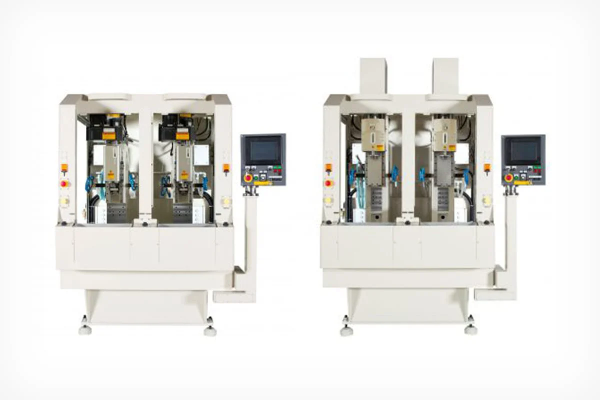
G Series(Standard Model)「G25 type」
Source: NISSIN ProSOL official website
https://mktg.nissin-mfg.co.jp/product/gseries/001/
https://mktg.nissin-mfg.co.jp/product/gseries/001/
| Processing Range | Diameter: ⌀3 to ⌀40 mm Length: Up to 80 mm |
|---|---|
| Spindle Stroke Length | Max. 300 mm |
| Equipment Dimensions | [One Spindle] H: 2150 mm W: 1300 mm D: 2400 mm [Two Spindles] H: 2150 mm W: 1700 mm D: 2400 mm |
| Automatic Measurement Function | Not indicated on website |
| Sizing Function | Not indicated on website |
| Power Specifications | Not indicated on website |
| Manufacturer Name | NISSIN ProSOL |
Synchronized honing stone movement and stroke, producing a high-precision finish even for ultra-small diameter holes
This model uses a servo-controlled mechanical expansion mechanism for honing stone expansion, synchronizing it with the stroke to achieve ultra-fine cutting. In addition to improving surface finishes, it also makes it easy to make precise corrections and produce stable and consistent processing diameters even during mass production. It can process holes with diameters as small as ⌀3 mm.
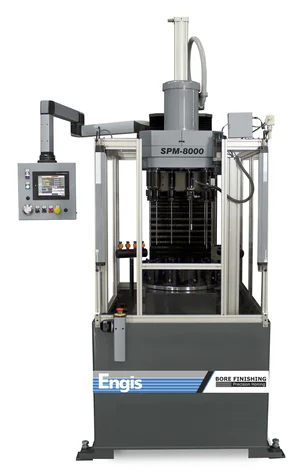
Small Production Machine(SPM)
Source: Engis official website
https://www.engis.com/bore-finishing-machines
https://www.engis.com/bore-finishing-machines
| Processing Range | Diameter: Max. ⌀51 mm Length: Not indicated on website |
|---|---|
| Stroke length (mm) | 457 mm |
| Equipment Dimensions | Not indicated on website |
| Automatic Measurement Function | Yes |
| Sizing Function | Not indicated on website |
| Power Specifications | Not indicated on website |
| Manufacturer Name | Engis |
High-precision bearings that almost completely eliminate spindle wobble
The reason for this model's high precision is its design, which makes it easy to stabilize workpiece feed and spindle rotation. Because it can precisely control the vertical movement and feed of its mechanisms, and the area around the spindle is also designed to be wobble-free, it makes it easy to maintain a high level of dimension reproducibility even for continuous processing of small and medium-sized components. It is well-suited to worksites that involve bore lengths of up to ⌀51 mm which want to perform steady mass production.
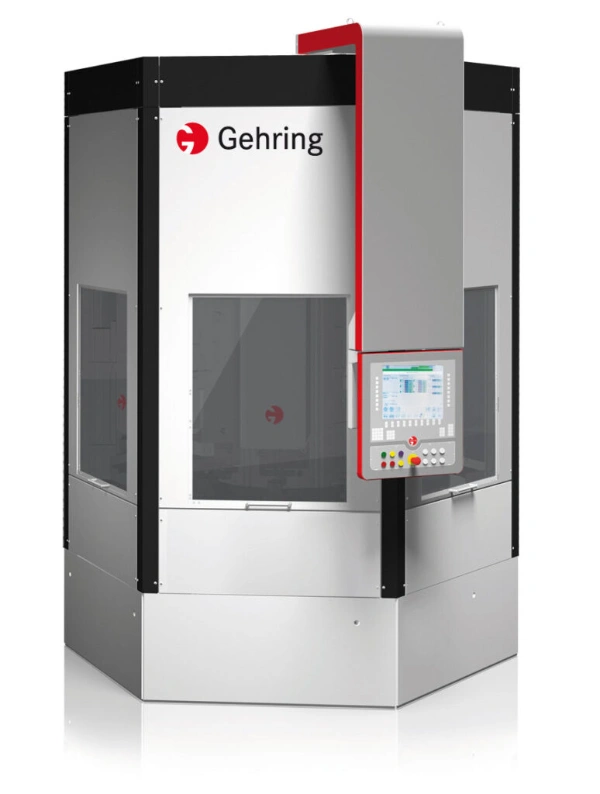
lifehone Series「L 200」
Source: Gehring official website
https://gehring-group.com/en/honing/honing-machines/lifehone/
https://gehring-group.com/en/honing/honing-machines/lifehone/
| Processing Range | Diameter: ⌀0.6 mm to ⌀12 mm Length: Not indicated on website |
|---|---|
| Stroke length (mm) | 200 mm (60 m/min) |
| Equipment Dimensions | Not indicated on website |
| Automatic Measurement Function | Yes |
| Sizing Function | Not indicated on website |
| Power Specifications | Not indicated on website |
| Manufacturer Name | Gehring |
Specialized for ultra-small diameter honing using a linear motor and real-time measurement
This model uses a linear motor for the stroke drive, so it can be used for ultra-small diameter holes measuring just ⌀0.6 mm to ⌀12 mm. An air gauge measures and corrects hole diameter and taper in real time while processing is in progress, so the machine can automatically maintain its accuracy, without human checking. The L 200 is well-suited for high-end components with exacting requirements, such as aerospace components or fuel injection pumps.
High-precision honing machines - Frequently Asked Questions
Q. Can submicron accuracy be maintained in Indian factory environments (air temperature differences, etc.)?
Maintaining submicron-level accuracy through a machine alone is not feasible. This is because even temperature changes of just a few degrees in a factory cause minor thermal expansion in workpieces and honing stones. The accuracy of high-precision honing machines presumes the use of air conditioners to create a constant temperature environment and precise chiller management of coolant.
Q. Can high-precision machines be used by operators without extensive experience?
Processing conditions are automated using CNC, so simple "operation" itself can be performed without the need for an experienced operator. However, it is important to keep in mind that optimal machinery handling, calibration, and the like require extensive engineering knowledge.
Choose the high-precision honing machine that's best for your own manufacturing goals
Even among high-precision honing machines, some models are designed for ultra-small diameter processing, while others boast high productivity. Each manufacturer has a different area of expertise. Likewise, device capabilities and manufacturer support requirements vary from business to business, differing for precision components, aerospace and medical devices, high-end processing-on-consignment, and the like.
This site has carefully selected honing machines that match different business types and issues and can help companies reduce their dependence on individual operators, so please use it to assist in your comparison and deliberation efforts.
[Advertisement]
Top Three Honing Machines
That Free You from Reliance on Individual Operators
Top Three Honing Machines
That Free You from Reliance on Individual Operators
BS-VI standards and growing EV demand are driving unprecedented needs for precision machining.
While the "overseas components + local assembly" model keeps initial costs low, design mismatches and unclear accountability create long-term risks.
Integrated management from design to assembly ensures consistent machining accuracy regardless of operator, minimizing material loss, accelerating ROI, and building the foundation for global trust.
Advertiser Disclosure:
We receive compensation from some of the companies listed below.This compensation may affect which companies are included and the order in which they appear.
For
precision component suppliers
precision component suppliers
G Series
NISSIN ProSOL
NISSIN ProSOL
Source: NISSIN ProSOL official website https://mktg.nissin-mfg.co.jp/product/gseries/
This honing machine synchronizes stroke and stone expansion in 0.01 μm increments, enabling precision honing of holes as small as 3 mm in diameter and 80 mm deep, even in hard materials.
Automatic electronic control and made-to-order jigs reproduce the techniques of veteran operators.
These honing machines eliminate deviations in the manufacturing of precision components such as control valves while also reducing personnel costs.
| Bore Diameter |
⌀3~⌀100 |
|---|---|
| Workpiece Length |
130mm |
| Spindle Stroke Length |
Max. 300mm |
Main Applications
Gears / Connecting rods / Hydraulic valves, etc.
For
large components and heavy industry
large components and heavy industry
VL Series
Nagel
Nagel
Source: Nagel official website https://nagel.com/en/products/honing/honing-machines/tube/
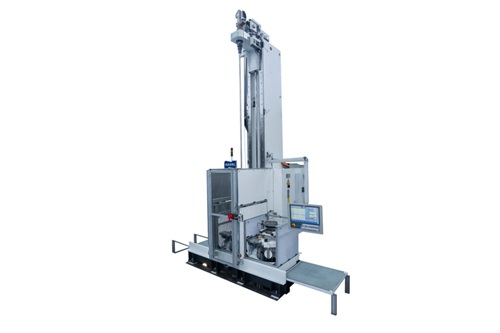
Machine height can be reduced through pit installation, reducing the footprint and using less volumetric space. It also makes it easy to mount and unmounts heavy objects such as engine blocks, reducing the operation workload.
They can even cut the large machining allowances unique to heavy industry in short amounts of time.
| Bore Diameter |
~⌀350 |
|---|---|
| Workpiece Length |
3,800mm |
| Spindle Stroke Length |
Not specified on official website |
Main Applications
Long pipes and tubes / Piston rods / Heavy workpieces / Exterior diameter processing, etc.
For
parts repairs and processing-on-consignment
parts repairs and processing-on-consignment
SV Series
Sunnen
Sunnen
Source: Sunnen official website https://sunnen.com/products/sv-15-vertical-honing-machine
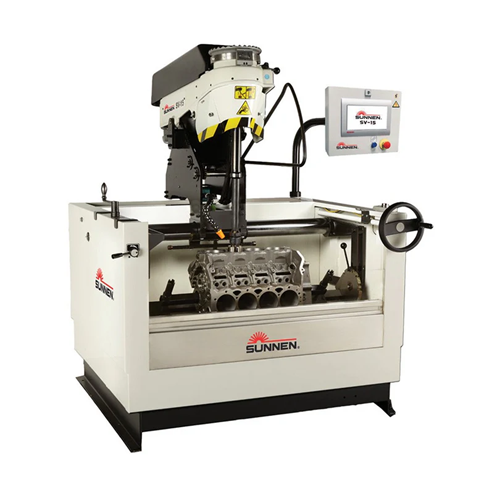
A graph showing the status of the hole being honed is displayed on-screen, in real time. This makes it easy to visually understand where the workpiece is and how it is warped, accelerating repair decisions.
These systems can store up to 100 processing settings at any time. They can also be backed up via USB, so even for small-lot, high-mix jobs, you can instantly reproduce the same processing as in previous jobs. They also shorten set-up times.
| Bore Diameter |
~⌀203 |
|---|---|
| Workpiece Length |
279mm |
| Spindle Stroke Length |
~225mm |
Main Applications
Engine blocks, etc.