
Advanced Honing Navigator │ Choose the Ideal Honing Machine » Types of honing machine » Horizontal Honing Machines
Horizontal Honing Machines
Contents
show more
This page explains how horizontal honing machines work, and how to pick the right one, focusing on the two strengths of processing long workpieces and handling high-mix production. It also provides examples of specific products.
What are horizontal honing machines, and how do they work?
Horizontal honing machines are machine tools in which a spindle with an attached honing stone moves reciprocally parallel to the floor to finish the interior diameters of workpieces. There are two ways in which they differ from vertical honing machines.
The first is that there is no need to vertically lift out the spindle, so long objects can be processed without being limited by the factory ceiling height. The second is that the spindle is located at operator waist level. This makes it easy to mount and unmount workpieces and to change set-ups.
Advantages of using horizontal honing machines
Processing long components and deep holes
When processing construction machinery hydraulic cylinders, oil/gas drilling tubes, and other long objects, there are times when the ceiling height is too low to use a vertical honing machine without drilling an under-floor pit. With a horizontal machine, on the other hand, workpieces are installed horizontally, eliminating the need for pit construction or ceiling height concerns. If you have the space in your factory for a horizontal machine, you have what it takes for physical installation and processing.
Speedy set-up changes for high-mix, low-volume production
Horizontal machines, whose spindles are located at eye level in front of the operator, are a good fit for manual honing, where the operator supports the component by hand while it is being cut. Even in worksites that handle a high mix of valves, gears, and other components of different sizes every day, jigs and honing stones can be swapped out quickly, keeping time losses due to set-up changes to a minimum.
Disadvantages of using horizontal honing machines
Sagging countermeasures and large amounts of installation space are necessary
One of the weak points of horizontal honing machines is that when long, heavy objects are placed on their sides, their middles can sag under their own weight. Specialized jigs (steady rests) must be used to support workpieces from below and prevent sagging.
Also, the longer (wider) a machine's body is, the more area it occupies on the factory floor. Additional space must also be set aside on the spindle side/transport side, where long workpieces are inserted or withdrawn, so there has to be enough room from the initial layout design stage.
Main applications of horizontal honing machines
Long workpieces and deep holes
Horizontal honing machines are often used in infrastructure, defense, and energy industry workplaces.
- Long hydraulic cylinders for construction machinery
- Thick-walled tubes for oil and gas drilling
- Aircraft landing gear
- Cannon bodies
High-mix, low-volume production and general-purpose use
Horizontal honing machines are also used in processing-on-consignment worksites (job shops) which handle different workpiece sizes and types from day to day.
- Hydraulic and pneumatic valves/manifolds
- Farming machinery (tractor) hydraulic components
- Cylinders for rebuilding engines
How to choose a horizontal honing machine
The specs you need will depend on "what it is you plan to process." If you plan to work with long workpieces or deep holes, the key points will be stroke length and spindle rigidity. If you will be performing high-mix production, then the key points will be the ease of making set-up changes and the speed with which honing stones can be replaced.
Furthermore, you should confirm if the machine is a good fit for India's voltage environment (with different fluctuation ranges in different regions) and your power supply specifications. If downtime is a possibility, it's best to choose a manufacturer that can supply you with parts and technical support in India.
This site presents a carefully selected list of honing machines available in India, categorized by the business sector they are best suited for, with the aim of eliminating the problem of reliance on the skills of individual operators. It also presents the support systems of each manufacturer, so please use it in your comparison and deliberations.
List of horizontal honing machines
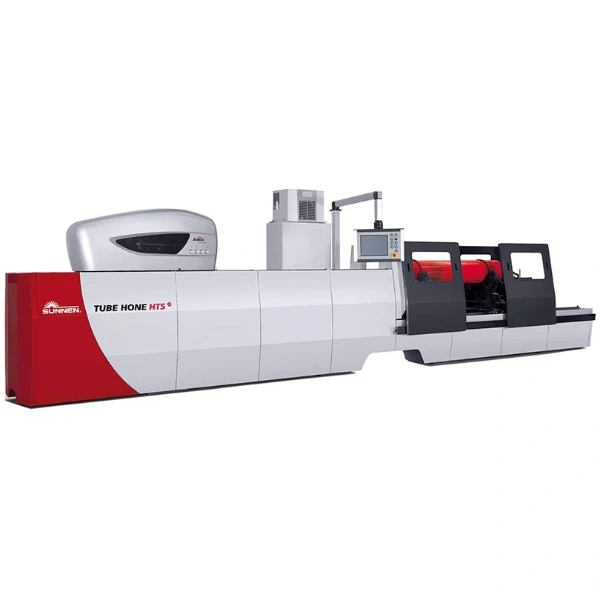
HTS Series(Tube Honing Machine)「HTS074020」
Source: Sunnen official website
https://www.sunnen.com/products/hts-tube-honing-machine
https://www.sunnen.com/products/hts-tube-honing-machine
| Processing Range | Diameter: Max. ⌀1,200 mm Length: Not indicated on website |
|---|---|
| Stroke length (mm) | Not indicated on website |
| Equipment Dimensions | Not indicated on website |
| Automatic Measurement Function | Not indicated on website |
| Sizing Function | Not indicated on website |
| Power Specifications | Three phase 460 V (frequency not indicated) |
| Manufacturer Name | Sunnen |
A model specialized for high volume processing of long tubes
The HTS074020 has a processing capacity of up to 1,600 cm³/h and is highly suited to mass production lines that perform large-scale processing of long tubes with identical specifications. It has functions for automatically adjusting the spindle rotation speed and automatically compensating for bore geometry issues, so it can maintain a stable level of precision even when used by operators without extensive experience. With its modular structure, bore lengths can be expanded in increments of 4 m or 6 m. Its design makes it easy to make future changes to processing lines.
Horizontal honing machines - Frequently Asked Questions
Q. Don't long, heavy components suffer from sagging when they are placed on their sides?
Sagging under a workpiece's own weight is one of the unique problems faced by horizontal honing machines. To prevent this deformation, many of these machines have support jigs such as V blocks or steady rests and are designed to keep workpieces level.
Q. Can horizontal honing machines be automated using gantry loaders or the like?
Although it is possible, adding a horizontal honing machine to an automatic transport line is harder than adding a vertical honing machine. Because vertical machines are designed to be loaded from the top, they are a good fit for automation. Horizontal machines, on the other hand, need their workpieces to be inserted from the side, so measures must be taken to integrate them in manufacturing lines. The strengths of horizontal machines lie in their specialization for long workpieces and their support for high-mix production, so they are designed more with the assumption of operator use than full automation.
Horizontal Honing Machines for Long and Mixed Production
Broadly speaking, there are two types of horizontal honing machines. The first is machines that are specialized for cutting tubes and cylinders that are several meters long without being limited by ceiling heights. The second is machines whose set-ups can be easily changed right in front of an operator, which are suited for high-mix production. The specs of the model you should choose will depend on which of these applications is your primary focus. Picking the machine that is right for your workplace assists with more value-generating capital investment.
Device capabilities and manufacturer support requirements vary from business to business, differing for precision components, large components and heavy industry, and component repair and processing. This site has carefully selected honing machines that match different business types and issues and can help companies reduce their dependence on individual operators, so please use it to assist in your comparison and deliberation efforts.
[Advertisement]
Top Three Honing Machines
That Free You from Reliance on Individual Operators
Top Three Honing Machines
That Free You from Reliance on Individual Operators
BS-VI standards and growing EV demand are driving unprecedented needs for precision machining.
While the "overseas components + local assembly" model keeps initial costs low, design mismatches and unclear accountability create long-term risks.
Integrated management from design to assembly ensures consistent machining accuracy regardless of operator, minimizing material loss, accelerating ROI, and building the foundation for global trust.
Advertiser Disclosure:
We receive compensation from some of the companies listed below.This compensation may affect which companies are included and the order in which they appear.
For
precision component suppliers
precision component suppliers
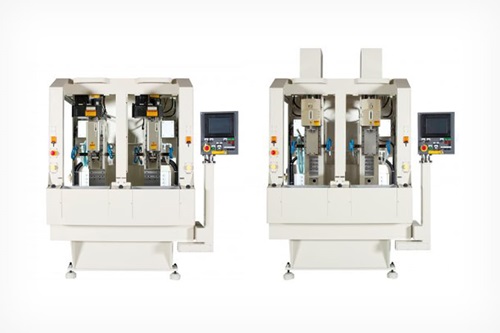
G Series
NISSIN ProSOL
NISSIN ProSOL
Source: NISSIN ProSOL official website https://mktg.nissin-mfg.co.jp/product/gseries/
This honing machine synchronizes stroke and stone expansion in 0.01 μm increments, enabling precision honing of holes as small as 3 mm in diameter and 80 mm deep, even in hard materials.
Automatic electronic control and made-to-order jigs reproduce the techniques of veteran operators.
These honing machines eliminate deviations in the manufacturing of precision components such as control valves while also reducing personnel costs.
| Bore Diameter |
⌀3~⌀100 |
|---|---|
| Workpiece Length |
130mm |
| Spindle Stroke Length |
Max. 300mm |
Main Applications
Gears / Connecting rods / Hydraulic valves, etc.
For
large components and heavy industry
large components and heavy industry
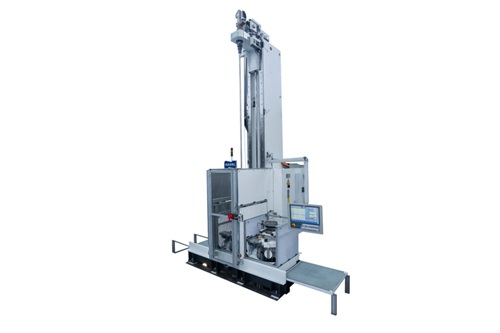
VL Series
Nagel
Nagel
Source: Nagel official website https://nagel.com/en/products/honing/honing-machines/tube/
Machine height can be reduced through pit installation, reducing the footprint and using less volumetric space. It also makes it easy to mount and unmounts heavy objects such as engine blocks, reducing the operation workload.
They can even cut the large machining allowances unique to heavy industry in short amounts of time.
| Bore Diameter |
~⌀350 |
|---|---|
| Workpiece Length |
3,800mm |
| Spindle Stroke Length |
Not specified on official website |
Main Applications
Long pipes and tubes / Piston rods / Heavy workpieces / Exterior diameter processing, etc.
For
parts repairs and processing-on-consignment
parts repairs and processing-on-consignment
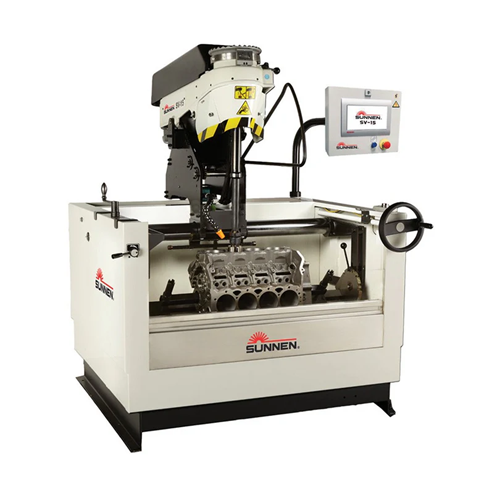
SV Series
Sunnen
Sunnen
Source: Sunnen official website https://sunnen.com/products/sv-15-vertical-honing-machine
A graph showing the status of the hole being honed is displayed on-screen, in real time. This makes it easy to visually understand where the workpiece is and how it is warped, accelerating repair decisions.
These systems can store up to 100 processing settings at any time. They can also be backed up via USB, so even for small-lot, high-mix jobs, you can instantly reproduce the same processing as in previous jobs. They also shorten set-up times.
| Bore Diameter |
~⌀203 |
|---|---|
| Workpiece Length |
279mm |
| Spindle Stroke Length |
~225mm |
Main Applications
Engine blocks, etc.