
Advanced Honing Navigator │ Choose the Ideal Honing Machine » Types of honing machine » Hydraulic Honing Machines
Hydraulic Honing Machines
Contents
show more
This page for users considering replacing aging hydraulic honing machines explains how to switch over to newer machines. Use it for insights on how to stabilize precision without reducing processing power.
What hydraulic honing machines are and why they're used in India's harsh worksite environments
Hydraulic honing machines are machine tools which use the pressure generated by a hydraulic pump to press the honing stone against the workpiece and finish interior diameters. One of their noteworthy characteristics is that instead of using an electric motor or servo control, they have a simple structure that operates using hydraulic cylinders and valves alone.
Even now, when the use of the latest CNC honing machines has become widespread, hydraulic machines remain in heavy use in Indian heavy industry, farming equipment, and repair worksites. This is because of their power and their toughness.
Overwhelming heavy cutting power for cutting construction and farming machinery cylinders
The cylinders of construction and farming machinery have large diameters and thick walls. They have large machining allowances, which also means that a great deal of pressure is applied to their honing stones. When the loads placed on electric motors increase, their rotation speed falls, but with hydraulic machines, the pressure in the hydraulic system presses the honing stone against the workpiece, so the cutting power remains the same, even if the amount of resistance increases. Even for large-diameter cylinders with large machining allowances, they have the power to perform cutting in a single fell swoop.
"Black box-free" toughness that is resistant to voltage drops and dust
One of the strengths of hydraulic machines is how tough they are. Since they do not have complex circuit boards, they can withstand the unstable voltages and large amounts of dust often found in Indian factories. If a problem does occur, it's easy to narrow down if the problem is in a hose, a valve, or a cylinder, and on-site mechanics can replace the problem component with a replacement component and restore service themselves. The minimization of downtime that can be achieved with hydraulic machines is another reason that they have been used for so many years in harsh worksite environments.
Example of a hydraulic honing machine
Most manufacturers have stopped developing new models of hydraulic honing machines. This page provides one example of a typical hydraulic honing machine for reference purposes.
H Series「H-50」
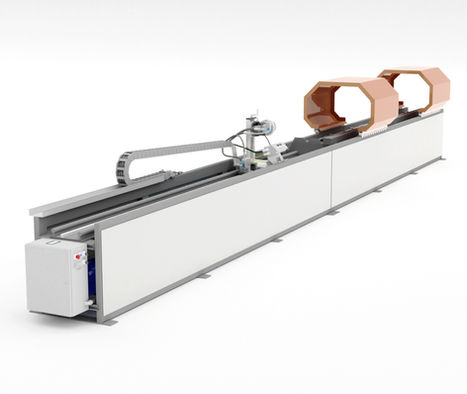
Source: Boelter official website
https://boelterint.com/honing-machine/
https://boelterint.com/honing-machine/
| Processing Range | Diameter: ⌀63.5 to 310 mm Length: Not indicated on website |
|---|---|
| Stroke length (mm) | 7,160 mm |
| Equipment Dimensions | H: Not indicated on website W: Not indicated on website D: 15,240 mm |
| Automatic Measurement Function | Not indicated on website |
| Sizing Function | Not indicated on website |
| Power Specifications | Not indicated on website |
| Manufacturer Name | Boelter International LLC |
A model for performing heavy cutting on large diameter cylinders
The H-50 is a hydraulic horizontal honing machine for use with large-diameter workpieces (diameters of ⌀63.5 to 310 mm). They are large machines with a stroke length of 7,160 mm, and they can handle everything from rough cutting to finishing for long cylinders like those used in construction machinery and farming machinery. They have the continuous heavy cutting power that comes with a hydraulic drive, so they can effectively finish workpieces with a large machining allowance.
While Fuji Honing's MRX/MRNX series is not a hydraulic series, there are products with hydraulic control* as an option.
*Source: Fuji Honing official website | As of survey conducted in March 2026(https://www.fujihoning.co.jp/en/products.html)
The hurdles faced when replacing aging hydraulic
honing machines
Hydraulic machines have been mainstays in worksites for years, but the longer factories use them, the closer they come to their limits.
Chronic oil leaks and dimensional deviation due to rising oil temperature
In aging hydraulic honing machines, oil gradually starts leaking out from the hydraulic pipework. Not only do older machines make the floor dirty, but the temperature of their operating oil rises under long-term use, causing thermal expansion that affects micron-level dimensional accuracy. This can cause a decline in the quality of the work they perform.
Resignation of experienced operators who can adjust analog valves
The processing precision of hydraulic machines is supported by the intuition of operators who are able to make fine adjustments to valve levers based on air and oil temperatures. There is always a risk that when a veteran operator who is attuned to a machine resigns, the machine's defect rate may climb, even though the same machine is still being used. Relying on people instead of machines makes it impossible to guarantee production stability.
Redefining CNC Honing Machines
The ideas that switching to a CNC machine means switching to less powerful equipment, or that CNC circuit boards often fail, are outdated. Below, we take a look at modern CNC honing machines.
The evolution of servo motors has produced torque that surpasses even hydraulic machines
Modern servo motors and ball screws have evolved. When used together, they can produce as much torque as a hydraulic machine, or, in some cases, even more torque. What's more, electrical machines aren't affected by oil temperature, so they can maintain the same level of precision from morning to night.
The future risks of switching to inexpensive, locally assembled machines
To keep costs down, it's not uncommon in India to choose inexpensive honing machines that are made by locally assembling components from overseas. However, these machines often suffer from poor precision due to design mismatches, and it's often unclear who is responsible for handling warranty issues when a machine breaks. This creates the risk of going back to square one, in which problems are addressed by veteran operators working from intuition. Choosing to go the inexpensive route can come back at you in the form of higher long-term costs and inconsistent quality.
How to switch to machines that offer
"next-generation toughness"
To ensure success when replacing a hydraulic honing machine, it's important to choose a honing machine from an overseas manufacturer that manages everything from design to final assembly itself, sold through a proper sales channel. Component quality and precision and machine assembly precision are all managed under a single brand, which produces a production system that is not reliant on the intuition of individual operators and offers more stable processing precision. Switching to a new machine with the same power as a hydraulic machine but with automatic quality control can improve yield and make it possible to rapidly recover capital investment.
Elevating your own production system to
next-generation levels
Continuing to use aging hydraulic machinery or replacing it with a machine from an inexpensive domestic manufacturer just delays the inevitable limitations your company will one day confront. For a company that is looking for a hydraulic machine, what's truly important is to choose a machine from an overseas manufacturer, purchased through proper sales channels, that offers the same toughness and cutting power as a hydraulic machine while eliminating reliance on specific equipment operators.
On this site, we've carefully selected honing machines with the sturdiness to withstand India's harsh work environments and the precision needed to eliminate reliance on individual operators, and we've organized them by the business sector they are best suited for. Please use it if you're planning to replace the hydraulic machines you've used through the years with new and dependable machines.
[Advertisement]
Top Three Honing Machines
That Free You from Reliance on Individual Operators
Top Three Honing Machines
That Free You from Reliance on Individual Operators
BS-VI standards and growing EV demand are driving unprecedented needs for precision machining.
While the "overseas components + local assembly" model keeps initial costs low, design mismatches and unclear accountability create long-term risks.
Integrated management from design to assembly ensures consistent machining accuracy regardless of operator, minimizing material loss, accelerating ROI, and building the foundation for global trust.
Advertiser Disclosure:
We receive compensation from some of the companies listed below.This compensation may affect which companies are included and the order in which they appear.
For
precision component suppliers
precision component suppliers
G Series
NISSIN ProSOL
NISSIN ProSOL
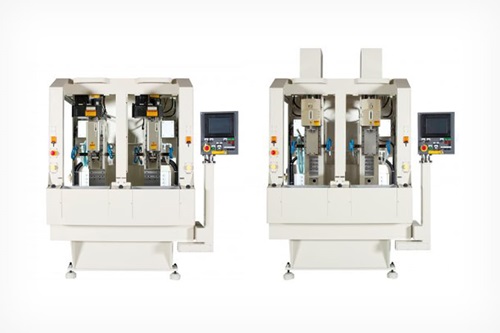
Source: NISSIN ProSOL official website https://mktg.nissin-mfg.co.jp/product/gseries/
This honing machine synchronizes stroke and stone expansion in 0.01 μm increments, enabling precision honing of holes as small as 3 mm in diameter and 80 mm deep, even in hard materials.
Automatic electronic control and made-to-order jigs reproduce the techniques of veteran operators.
These honing machines eliminate deviations in the manufacturing of precision components such as control valves while also reducing personnel costs.
| Bore Diameter |
⌀3~⌀100 |
|---|---|
| Workpiece Length |
130mm |
| Spindle Stroke Length |
Max. 300mm |
Main Applications
Gears / Connecting rods / Hydraulic valves, etc.
For
large components and heavy industry
large components and heavy industry
VL Series
Nagel
Nagel
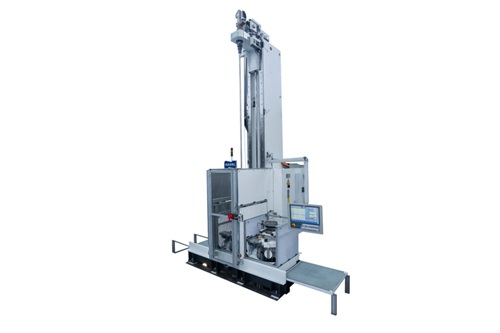
Source: Nagel official website https://nagel.com/en/products/honing/honing-machines/tube/
Machine height can be reduced through pit installation, reducing the footprint and using less volumetric space. It also makes it easy to mount and unmounts heavy objects such as engine blocks, reducing the operation workload.
They can even cut the large machining allowances unique to heavy industry in short amounts of time.
| Bore Diameter |
~⌀350 |
|---|---|
| Workpiece Length |
3,800mm |
| Spindle Stroke Length |
Not specified on official website |
Main Applications
Long pipes and tubes / Piston rods / Heavy workpieces / Exterior diameter processing, etc.
For
parts repairs and processing-on-consignment
parts repairs and processing-on-consignment
SV Series
Sunnen
Sunnen
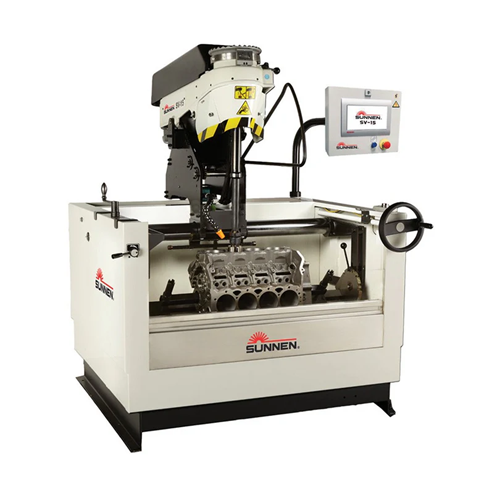
Source: Sunnen official website https://sunnen.com/products/sv-15-vertical-honing-machine
A graph showing the status of the hole being honed is displayed on-screen, in real time. This makes it easy to visually understand where the workpiece is and how it is warped, accelerating repair decisions.
These systems can store up to 100 processing settings at any time. They can also be backed up via USB, so even for small-lot, high-mix jobs, you can instantly reproduce the same processing as in previous jobs. They also shorten set-up times.
| Bore Diameter |
~⌀203 |
|---|---|
| Workpiece Length |
279mm |
| Spindle Stroke Length |
~225mm |
Main Applications
Engine blocks, etc.