Source: Abhi Fine Products official website https://www.abhifineproducts.com/
Honing machines for India · ABHI FINE PRODUCTS
A Coimbatore builder of honing machines,tools and fixtures under one roof
Abhi Fine Products was founded in Coimbatore in 1996 making honing tools, de-burring tools, jigs and fixtures, and has built honing machines since 2016 — so the tooling that runs in the machine comes from the older half of the business. Published machine ranges cover bores from 4 mm to 200 mm, with larger diameters quoted to order. Every model that publishes an electrical supply is listed at 415 V, 50 Hz, three phase — the supply an Indian shop floor already has.
What an Indian manufacturer should know first
Published supply is 415 V, 50 Hz, three phase on every model that lists it, so the transformer and frequency questions that come with an imported machine do not arise.
Published bore ranges run from 4 mm to 200 mm, with the AB2204 quoted up to 500 mm on request. Single-pass machines sit at the small end; expansion machines carry the larger bores.
Machines, honing tools, fixtures, tool holders and de-burring tools are all made in-house, so tooling and spares come from the same works as the machine.
Single-pass blind-bore tool sleeves are published as replaceable two to three times without buying a complete tool set, which moves cost per hole more than machine price does.
Vertical single-pass machines carry CE certification from 2023 alongside ISO 9001:2015, which matters when the end customer audits to a European standard.
Warranty period, lead time, spare-parts stock and on-site response time are not published. Settle all four in writing before the purchase order.
When should an Indian plant shortlist Abhi?
The case for a domestic builder is one supplier for the machine, the tool, the fixture and the holder. A component that needs a dedicated tool and a floating fixture designed around it is where that matters most, because the alternative is matching an imported machine to tooling sourced somewhere else.
A stronger match when...
Bores sit under about 60 mm and volume is high enough for single-pass diamond or CBN tooling to pay back.
Blind bores with undercuts, step bores or intersecting bores need tooling designed for the component.
Rough, semi-finish and finish should run on separate spindles across a rotary indexing table.
Floor space is tight — several models sit within a 1,100 × 1,200 mm footprint.
The machine has to be configured around the part rather than picked from a catalogue.
Tool re-sleeving, fixture changes and spares should come from one point of contact.
Confirm carefully when...
The bore is larger than 200 mm — only the AB2204 is published as quotable beyond that.
Part length exceeds the published limit — maximum workpiece length runs 100 mm to 500 mm by model, with honing length published at 150 mm to 700 mm on others.
Bore range and part length are not published for the model under discussion, as with the AB300 and AB616.
In-process gauging forms part of acceptance — it is published on some models, not across the range.
Warranty period, spare-parts holding and on-site response time need to be contractual.
The end customer requires capability studies or third-party certification beyond ISO 9001:2015.
Device capabilities and manufacturer support requirements vary from business to business, differing for precision components, large components and heavy industry, and component repair and processing.
We have carefully selected the honing machines that are best suited to companies based on the features and challenges of their varied businesses, freeing them from needing to rely on specific operators. Please use the information on this site in your comparisons and deliberations.
Two honing processes split the lineup. Single-pass finishes the bore in one up-and-down stroke with a plated or sintered tool, which suits smaller bores at volume. Expansion honing strokes repeatedly with stones that expand as they wear, which suits larger bores, deeper parts and a controlled crosshatch.
ABE10525, ABE12065, ABE150200, ABE20550, AB2204 Bores 5–200 mm, to 500 mm on request Part length 100–500 mm where published
Medium-volume work with changeovers, larger bores, deeper parts and a specified crosshatch
Spindle speed band drops as bore size rises; workpiece envelope on the AB2204; gauging option
Expansion horizontal
ABH1000: 5–20 mm, stroke 6–200 mm ABH2500: 5–20 mm, stroke 550 mm ABH450: 4–50 mm, honing length 150 mm, both customisable
Long or slender parts loaded from the front, and compact cells where a vertical column will not fit
Stroke length against component length; ABH450 auto gauging holds output size within 2–3 µm
Vertical tube honing
ABE12045: 5–50 mm, honing length up to 700 mm Spindle to 2,000 rpm, feed to 20,000 mm/min 450 L coolant with 5 micron paper band filter
Tubes and long bores that need a 0.2 Ra class finish over the full length
Tube straightness and support, coolant handling, and whether 700 mm covers the longest part in the plan
Tools, holders and fixtures
Single-pass blind-bore and through-bore tools, 5–60 mm; step-bore tools without a published range Multipass expansion, CBN, diamond and through-coolant tools Floating and rigid fixtures, three holder types
Retooling an existing machine, or pricing cost per hole rather than machine price
Sleeve replacement cycles, abrasive grit against the target finish, fixture type for the datum scheme
A published range is not confirmation that a specific part can be processed. Material, hardness, bore interruptions, undercuts, stock allowance, form accuracy, surface texture and tooling all change the practical limit.
Published bore ranges and machine sizes at a glance
Abhi publishes specifications model by model rather than as a single chart. Collected in one place, the pattern is clear: the small-bore machines are compact and the published gaps sit mostly on the single-pass side, where bore range and part length are often left to the enquiry.
Published specifications by model
Model
Type
Bore range
Part or honing length
Machine size L × B × H
Supply
AB300 NC F-Series
Single-pass vertical, 3 spindles / 4 stations
Not published
Not published
2,400 × 3,800 × 2,850 mm
Not published
ABS 406 Series
Single-pass vertical, 4 spindles / 6 stations
5–32 mm
Not published; carriage travel 700 mm
3,250 × 2,000 × 3,250 mm
415 V 50 Hz 3 ph
AB616 F-Series
Single-pass vertical, 6 spindles / 16 stations, auto gauging and auto expansion
Not published
Not published
2,400 × 3,800 × 2,850 mm
Not published
ABS 608
Single-pass vertical, double index table, CE certified
5–35 mm
Not published
Not published
Not published
ABE10525
Expansion vertical, single spindle
5–20 mm
100 mm
1,100 × 1,200 × 2,200 mm
415 V 50 Hz 3 ph
ABE12065
Expansion vertical, single spindle
20–65 mm
300 mm
2,000 × 2,000 × 3,000 mm
415 V 50 Hz 3 ph
ABE150200
Expansion vertical, single spindle
50–200 mm
500 mm
3,000 × 2,000 × 3,500 mm
415 V 50 Hz 3 ph
ABE20550
Expansion vertical, twin spindle, auto air gauging
5–50 mm
150 mm honing length
2,500 × 2,000 × 2,500 mm
415 V 50 Hz 3 ph
AB2204 Series
Expansion vertical, double column, rotary index
5–65 mm; to 500 mm on request
Workpiece 200 × 200 × 250 mm
2,900 × 2,050 × 2,800 mm (coolant tank not included)
415 V 50 Hz 3 ph
ABE 12045
Vertical tube honing
5–50 mm
700 mm honing length
3,000 × 2,000 × 3,500 mm
Not published
ABH1000 Series
Expansion horizontal
5–20 mm
Stroke 6–200 mm
1,100 × 1,200 × 2,200 mm
415 V 50 Hz 3 ph + N
ABH2500 Series
Expansion horizontal
5–20 mm
Stroke 550 mm
1,100 × 1,200 × 2,200 mm
415 V 50 Hz 3 ph + N
ABH450 Series
Expansion horizontal, auto gauging
4–50 mm, customisable
150 mm honing length, customisable
Not published
Not published
"Not published" means the figure does not appear on the product page, not that the machine cannot do it. Ask for the datasheet for the model being quoted, and treat any range as subject to the component.
AB300 NC F-Series: three spindles across a four-station index
The cycle is split across spindles rather than repeated on one. Spindle 1 brushes, spindle 2 runs the rough tool and spindle 3 the finish tool, while the fourth station handles loading and unloading — so a part is being loaded while three others are being cut.
An NC rotary index table with a floating fixture per station
The Z axis is servo controlled with automatic counter-balancing pneumatic cylinders, and a PLC with absolute encoder holds position across the index. A special floating fixture lets the tool find the bore rather than forcing the part to be perfectly located, which is what keeps a single-pass tool from being loaded off-axis. Auto lubrication is fitted.
Spindles / stations3 spindles, 4 stations
Spindle typePb25
Z axisServo with pneumatic counter-balance
ControlPLC with absolute encoder
Machine size2,400 × 3,800 × 2,850 mm
WeightApprox. 3,000 kg
Bore range, part length, spindle speed and electrical supply are not published for this model. If the component sits near the edge of what single-pass tooling covers, ask for those four figures before comparing it with the ABS 406, which publishes 5–32 mm and a 700 mm carriage travel. The 3,800 mm width includes the filtration unit — allow for it in the layout.
ABE12065: single-spindle expansion honing for 20 to 65 mm bores
This is the changeover machine in the range. Bores of 20 to 65 mm and parts up to 300 mm long cover a wide slice of automotive and hydraulic work, and an 800 mm carriage travel gives room to set stroke position rather than working at the limit.
Servo feed and PLC control in place of manual adjustment
The Z-axis slide runs on servo-controlled feed under PLC control with centralised auto lubrication, which removes the hand-wheel judgement that makes stroking depth operator-dependent. A belt-driven spindle turns at 50 to 750 rpm and a separate coolant filtration unit is included. The published intent is quick changeover for medium to high volume production.
Bore diameter20–65 mm
Part lengthUp to 300 mm
Carriage travel800 mm; stroker to 3,000 mm/min
Spindle speed50–750 rpm, belt drive
Motor torqueSpindle 15 Nm, column 15 Nm
Machine size and supply2,000 × 2,000 × 3,000 mm, 415 V 50 Hz 3 ph
Neither gauging nor the drive for stone expansion is published for this model. Where in-process size control has to be part of acceptance, compare it with the ABE20550, which publishes an auto air gauging system and 0.1 µm per pulse tool expansion, or the AB2204, which lists in-process and post-process gaging as options. Pneumatic supply is listed as optional here, so confirm whether the quoted build needs it.
Installation and utilities on an Indian shop floor
A domestic machine removes the usual import questions, and what remains is ordinary site preparation. 415 V, 50 Hz, three phase appears on every model that publishes a supply, so no transformer, frequency conversion or CE-to-local re-certification sits between delivery and commissioning.
Compressed air: the ABS 406 lists a 5 to 6 bar base requirement, and pneumatic supply is optional on several expansion models. Confirm which build needs air and at what flow.
Footprint: published sizes run from 1,100 × 1,200 mm on the ABE10525 and ABH series to 2,400 × 3,800 mm on the AB300, AB506, AB616 and AB600 models, whose figures include the filtration unit. The ABS 406 sits at 3,250 × 2,000 mm.
Height: vertical machines reach 3,500 mm on the ABE150200 and ABE 12045. Check building clearance and the tool-change reach above the column before allocating a bay.
Floor loading: the AB300 and AB616 are published at around 3,000 kg and the ABS 406 at 2,300 kg with a 500 kg maximum table load. Weight is not published for the expansion vertical models — request it.
Coolant and filtration: published volumes are 80 L on the ABH1000, 110 L on the ABH2500 and 450 L with a 5 micron paper band filter on the ABE 12045. Cartridge, magnetic separator and paper band options are listed on the ABE20550 and ABH450.
Honing oil: the published case study ran on a fluid named ABHI Honing Oil AB 150, though honing oil is not listed among the published products. Confirm supply, grade and which fluid the process is validated with, because changing it changes the finish.
Treat this as a preparation checklist, not a substitute for a site survey by the supplier.
A cast-iron blind bore held to 8 microns of cylindricity at 60 parts an hour
A blind bore is the harder case for expansion honing, because the stones cannot run past the bottom of the hole and wear unevenly as a result. This published case covers a water pump flange in FG 260 cast iron with a 60 mm deep blind bore.
A 60 mm deep blind bore at Ø38.1 mm with a +0.020/+0.035 mm tolerance band, meaning a finished size between Ø38.120 and Ø38.135. Cylindricity had to stay within 0.01 mm and surface finish within 0.635 Ra, with 0.040 mm of stock to remove and the whole thing repeating under production conditions.
Result
Stone expansion resolved to 0.1 micron kept size inside the band without stopping to re-set between parts, and the process ran on Abhi honing oil AB 150.
Ø38.128 achieved against a Ø38.120–38.135 requirement, 0.008 mm cylindricity against a 0.01 mm limit, 0.4 Ra against a 0.635 Ra limit, at 60 pieces per hour.
The case sheet names the machine as ABE10550, which is not one of the model numbers listed on the expansion vertical range page — confirm which current build corresponds before treating it as a like-for-like reference. One result on one cast-iron component does not set an expected outcome for a different material, tolerance, depth or volume.
Tooling economics decide cost per hole, not machine price
Single-pass honing puts the accuracy in the tool rather than the cycle, so the tool is the consumable that carries the cost. Blind-bore tool sleeves are published as replaceable two to three times without buying a complete tool set, which is the figure to build a per-hole cost from.
Single-pass tools: blind-bore and through-bore tools published at 5 to 60 mm, diamond or CBN abrasive on plated sleeves. Step-bore tools are offered without a published diameter range.
Expansion tools: multipass expansion tools, plus CBN, diamond and through-coolant variants for harder materials and deeper bores.
Holders: collet-type floating, link-type side-lock floating and side-lock axial floating holders let the tool align to the bore instead of the fixture.
Fixtures: axial floating, radial and axial floating, and rigid types — the choice follows the datum scheme on the drawing.
De-burring: burr-off tools with single and double cutting edges handle the cross-hole burr that honing leaves behind.
Grit selection: abrasive grit is matched to the target finish and stock removal rate, and crosshatch angle is set by the ratio of spindle speed to stroke speed.
Ask for cost per hole across a full sleeve life rather than tool price, and confirm the re-sleeving turnaround, since that interval is what sets the spare tooling a line has to hold.
Commissioning, operator training and post-sales support are published as part of supply, and a stated 90% of support requests are handled in virtual sessions rather than site visits.
ISO 9001:2015 obtained in 2022, across the facilities, plus an MSME Sustainable Certification.
CE certification for vertical single-pass honing machines, dated 2023 and referenced on the ABS 608.
Remote diagnostics: process monitoring, error detection, tool life management and remote diagnostics are published as HMI functions on vertical single-pass machines. The ABS 406 product page itself lists only a PLC with upgraded software, so confirm which functions the quoted build carries.
Build capacity: the works is published as able to build ten machines simultaneously, with a design team of more than 20 years' experience.
Single source: machines, tools, holders, fixtures and spares come from the same Coimbatore operation, so a tooling problem and a machine problem go to one contact.
Not published: warranty period, spare-parts stock levels, on-site response time and annual maintenance contract terms. Put all four in the purchase agreement.
What is the warranty period, and what does it cover on the machine, the tooling and the fixture separately?
What is the quoted lead time from order to despatch, and from despatch to commissioning?
Which spares are held in stock, and what is the replenishment time for a spindle, servo drive or PLC module?
What triggers an on-site visit rather than a virtual session, and what is the target response time for the plant's location?
Can a trial be run on the actual component at Coimbatore before the machine is built?
What is the re-sleeving turnaround for single-pass tools, and how many spare tools should the line hold?
What operator and maintenance training is included, for how many people and in which language?
Which documentation is supplied at handover — capability study, inspection report, electrical drawings, CE file where applicable?
Information to prepare for an Abhi honing-machine enquiry
Because machines here are configured around the component, the enquiry carries more weight than a model number. Send the bore, the required result and the production conditions and the tooling, fixture and station count follow from them.
Part drawing with bore geometry, datum scheme, clamping surfaces and any undercut or step
Whether the bore is blind, through, stepped, interrupted or intersecting
Material and hardness — cast iron, steel, sintered or non-ferrous behave differently under the same abrasive
Incoming bore size, stock allowance and the variation coming out of the previous operation
Final bore diameter and tolerance band
Cylindricity, roundness and straightness limits
Surface roughness, crosshatch angle where specified, and the measurement method
Number of bores per part and whether they can be honed in one setting
Parts per hour, batch size, shift pattern and number of variants sharing the machine
Whether in-process gauging and size correction are part of acceptance
Loading method: manual, robot or integration into an existing line
Floor space, building height, compressed air availability and coolant disposal route
For tube honing, add tube length, wall thickness, incoming straightness and how the tube will be supported and loaded.
Company profile
Company name
Abhi Fine Products
Established
1996
Head office
18–19, 2nd Cross, Santhi Nagar, Avarampalayam, Coimbatore 641 006, Tamil Nadu, India
Factory
Site No. 25 & 26, SF No. 306, Sri Lakshmi Industrial Complex, Sengoda Goundan Pudur Road, Arasur Pirivu, Avinashi Road, Coimbatore 641 407, Tamil Nadu, India
[Advertisement] Top Three Honing Machines That Free You from Reliance on Individual Operators
BS-VI standards and growing EV demand are driving unprecedented needs for precision machining.
While the "overseas components + local assembly" model keeps initial costs low, design mismatches and unclear accountability create long-term risks.
Integrated management from design to assembly ensures consistent machining accuracy regardless of operator, minimizing material loss, accelerating ROI, and building the foundation for global trust.
Advertiser Disclosure:
We receive compensation from some of the companies listed below.This compensation may affect which companies are included and the order in which they appear.
For precision component suppliers
G Series NISSIN ProSOL
Source: NISSIN ProSOL official website https://mktg.nissin-mfg.co.jp/product/gseries/
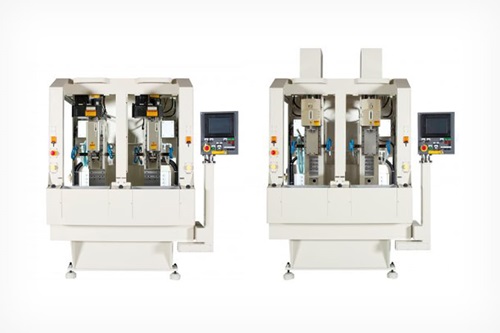
This honing machine synchronizes stroke and stone expansion in 0.01 μm increments, enabling precision honing of holes as small as 3 mm in diameter and 80 mm deep, even in hard materials.
Automatic electronic control and made-to-order jigs reproduce the techniques of veteran operators.
These honing machines eliminate deviations in the manufacturing of precision components such as control valves while also reducing personnel costs.
Source: Nagel official website https://nagel.com/en/products/honing/honing-machines/tube/
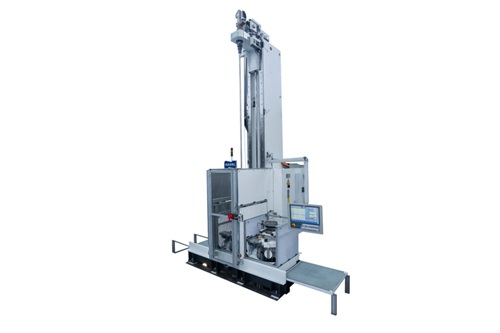
Machine height can be reduced through pit installation, reducing the footprint and using less volumetric space. It also makes it easy to mount and unmounts heavy objects such as engine blocks, reducing the operation workload.
They can even cut the large machining allowances unique to heavy industry in short amounts of time.
Bore Diameter
~⌀350
Workpiece Length
3,800mm
Spindle Stroke Length
Not specified on official website
Main Applications
Long pipes and tubes / Piston rods / Heavy workpieces / Exterior diameter processing, etc.
Source: Sunnen official website https://sunnen.com/products/sv-15-vertical-honing-machine
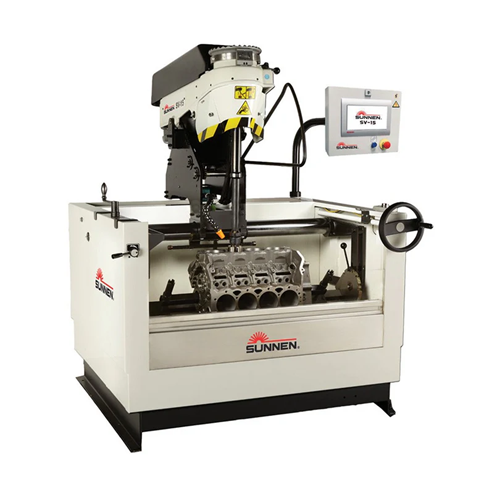
A graph showing the status of the hole being honed is displayed on-screen, in real time. This makes it easy to visually understand where the workpiece is and how it is warped, accelerating repair decisions.
These systems can store up to 100 processing settings at any time. They can also be backed up via USB, so even for small-lot, high-mix jobs, you can instantly reproduce the same processing as in previous jobs. They also shorten set-up times.