
Advanced Honing Navigator │ Choose the Ideal Honing Machine » What is honing machine
What is Honing Machine
Contents
show more
Honing machines are machine tools that perform polishing by rotating and reciprocally moving a honing stone. They are typically used to smooth the interior diameters of holes in products and to improve their dimensional precision and circularity. There are also honing machines for finishing gear teeth (gear honing) and for finishing exterior surfaces (external honing).
This article explains the roles played by honing machines, why companies use them, and how they work. It also gives a rough estimate of how much they cost. It provides an overview of just what kinds of machines honing machines are and why they’re so important in India.
Main applications of honing machines
Honing machines are used in the cylinder, motorcycle, and EV manufacturing fields. If you’re wondering if your company could use a honing machine for your own components, then have a look at the examples of products for individual applications, such as automobiles, heavy machinery, or aerospace equipment. Please have a look at the following articles, as well.
Advantages of honing machines
This section discusses how much it costs to deploy honing machines, what roles they serve, and their objectives.
Helping reduce waste and personnel costs
With honing machines, you can standardize and reproduce conditions set by experienced operators. This helps reduce human error, which can easily occur when operators have different levels of experience or skill. In addition to reducing the amount of waste from reworking and defective article disposal, they can also help you eliminate the problem of needing to rely on specific individual operators.
Extending product lifespans and reducing complaints
Bore honing uses rotational movement and reciprocal movement, usually to create fine cross-hatched patterns on the interiors of holes. This cross-hatching enables engines and hydraulic cylinders to hold lubricant better, which reduces friction between components and the damage it causes. That can help extend product lifespans and curb quality problems.
Support for processing of high precision components for EVs
Electric vehicles (EVs) generally have high requirements for quiet operation and quality. The dimensional precision and surface quality of components are being seen as more important than ever. Bore honing improves the precision of the center holes of gear components, while gear honing improves the precision of gear tooth finishing. Using these different kinds of honing techniques for different precision requirements can make you more competitive as a Tier 1 supplier.
How honing machines work
Honing machines perform rotational and reciprocal movement simultaneously to process holes. Please see the page below for an explanation of their basic operations, how processing works, why they offer such high precision and quality, the honing stone expansion method, and how they differ from boring machines, which they are often confused with.
Honing machine pricing
Honing machines come in a wide range of prices, costing anywhere from roughly 60,000 yen to 50 million yen or more. The page below provides price estimates for different kinds of honing machines, such as hydraulic, horizontal, and CNC honing machines, along with the factors that affect their pricing. It also explains the risks of using a machine from a domestic manufacturer or a used machine from an overseas manufacturer (obtained through unofficial distribution channels).
Honing machines are investments for succeeding in the global market
Honing machines aren’t just machine tools. You could even go so far as to call them essential investments for enabling Indian manufacturing to meet global quality standards and succeed in the global market. But when companies start to actually consider introducing honing machines, they often struggle with deciding what kind of machine fits their own business challenges and production system.
Device capabilities and manufacturer support requirements vary from business to business, differing for precision components, large components and heavy industry, and component repair and processing.
We have carefully selected the honing machines that are best suited to companies based on the features and challenges of their varied businesses, freeing them from needing to rely on specific operators. Please use the information on this site in your comparisons and deliberations.
[Advertisement]
Top Three Honing Machines
That Free You from Reliance on Individual Operators
Top Three Honing Machines
That Free You from Reliance on Individual Operators
BS-VI standards and growing EV demand are driving unprecedented needs for precision machining.
While the "overseas components + local assembly" model keeps initial costs low, design mismatches and unclear accountability create long-term risks.
Integrated management from design to assembly ensures consistent machining accuracy regardless of operator, minimizing material loss, accelerating ROI, and building the foundation for global trust.
Advertiser Disclosure:
We receive compensation from some of the companies listed below.This compensation may affect which companies are included and the order in which they appear.
For
precision component suppliers
precision component suppliers
G Series
NISSIN ProSOL
NISSIN ProSOL
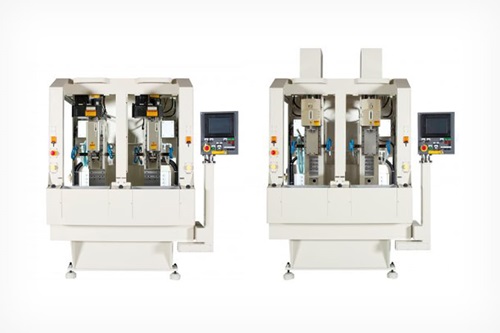
Source: NISSIN ProSOL official website https://mktg.nissin-mfg.co.jp/product/gseries/
This honing machine synchronizes stroke and stone expansion in 0.01 μm increments, enabling precision honing of holes as small as 3 mm in diameter and 80 mm deep, even in hard materials.
Automatic electronic control and made-to-order jigs reproduce the techniques of veteran operators.
These honing machines eliminate deviations in the manufacturing of precision components such as control valves while also reducing personnel costs.
| Bore Diameter |
⌀3~⌀100 |
|---|---|
| Workpiece Length |
130mm |
| Spindle Stroke Length |
Max. 300mm |
Main Applications
Gears / Connecting rods / Hydraulic valves, etc.
For
large components and heavy industry
large components and heavy industry
VL Series
Nagel
Nagel
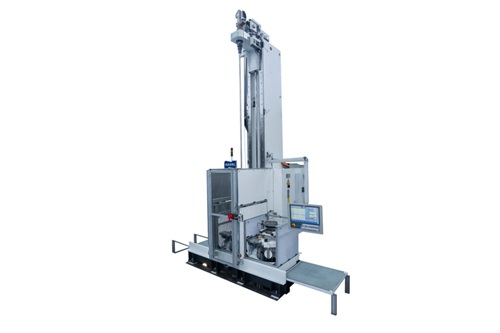
Source: Nagel official website https://nagel.com/en/products/honing/honing-machines/tube/
Machine height can be reduced through pit installation, reducing the footprint and using less volumetric space. It also makes it easy to mount and unmounts heavy objects such as engine blocks, reducing the operation workload.
They can even cut the large machining allowances unique to heavy industry in short amounts of time.
| Bore Diameter |
~⌀350 |
|---|---|
| Workpiece Length |
3,800mm |
| Spindle Stroke Length |
Not specified on official website |
Main Applications
Long pipes and tubes / Piston rods / Heavy workpieces / Exterior diameter processing, etc.
For
parts repairs and processing-on-consignment
parts repairs and processing-on-consignment
SV Series
Sunnen
Sunnen
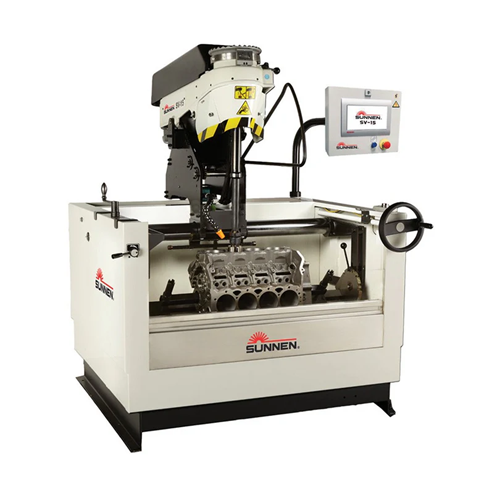
Source: Sunnen official website https://sunnen.com/products/sv-15-vertical-honing-machine
A graph showing the status of the hole being honed is displayed on-screen, in real time. This makes it easy to visually understand where the workpiece is and how it is warped, accelerating repair decisions.
These systems can store up to 100 processing settings at any time. They can also be backed up via USB, so even for small-lot, high-mix jobs, you can instantly reproduce the same processing as in previous jobs. They also shorten set-up times.
| Bore Diameter |
~⌀203 |
|---|---|
| Workpiece Length |
279mm |
| Spindle Stroke Length |
~225mm |
Main Applications
Engine blocks, etc.