
Advanced Honing Navigator │ Choose the Ideal Honing Machine » Comparison between Internal Grinding Machines and Honing Machines
Comparison between Internal Grinding Machines and Honing Machines
Contents
show more
Honing machines allow users to overcome the weaknesses of internal grinding machines. This page explains how the mechanisms of these two machines differ and why honing machines produce higher quality while also helping lower costs. Please use it when making capital investment decisions and help the Indian manufacturing industry succeed in the global market.
[Comparison Table] Key differences between internal grinding machines and honing machines
Internal grinding machines and honing machines are similar yet have important differences: how their honing stones are applied (contact area), their cutting speed, and their cutting temperature. The table below summarizes their characteristics and differences.
| Item | Internal Grinding Machine | Honing Machine |
|---|---|---|
| Processing Mechanism | Linear/point contact (cuts using high speed rotation) | Area contact (tracks inside wall and evens it out using low-pressure, low-speed profile machining) |
| Cutting Heat (Damaged Layer) | High (risk of burning or deformation due to heat) | Low (cutting generates little heat) |
| Deep Hole Circularity/Cylindricality | The deflection of the honing stone axis can cause precision to decrease the deeper the hole (there is a tendency toward tapering) | The entire tool expands uniformly, so it’s easy to maintain circularity and cylindricality even for deep holes. |
| Surface Finish | Fine grooves in a single direction (almost mirror-like finish) | Grid-like pattern of intersecting lines (cross-hatching that helps retain lubricant) |
| Hole Position and Angle Correction | Can fix curved holes and turn them into straight holes | Making corrections is difficult, so the hole should be corrected in an upstream process |
Differences in the mechanisms of these machines that affect the quality of their finishes
Let’s look at the technical differences in the mechanisms of internal grinding machines and honing machines that explains why honing machines produce better quality finishes.
1. Thermal damage (damaged layer)
Internal grinding machines rotate honing stones at high speeds, cutting away material from the points of lines of contact between the stones and the material. They have a high amount of momentary friction heat, which produces several disadvantages. Namely, they are prone to producing damaged layers by causing metal surfaces to burn or lose hardness.
In the case of honing machines, multiple honing stones are used, cutting material away from the entire surface of contact with the material. They cut gently, at low speeds and low pressure, so they produce little cutting heat and can be used to process material without negatively affecting its intrinsic qualities. They are less likely to produce defects, which contributes to higher yields.
2. The limits circularity and cylindricality that can be achieved for deep holes
Internal grinding machines push the honing stones against the material pushing the axis horizontally. One of the disadvantages of this is that the pressure causes the axis to bend, so the deeper the hole, the more likely there will be tapering defects (the hole becoming smaller at its end).
With honing machines, on the other hand, it is more like opening an umbrella within a tube. Pressure is applied uniformly in all directions through the use of the “fixed pressure expansion” method. Because the axis does not bend, this offers the benefits of making it easier to achieve the same level of circularity and cylindricality from the mouth of the hole to its end, even for long cylinders.
3. The presence of oil membrane-retaining cross-hatching
If sliding metal surfaces are polished to a mirror finish, they have difficulty retaining oil, and when there is not enough oil, seizing can occur. One of the unique features of honing machines is that they produce a cross-hatched finish with tiny oil-retaining grooves, so they reduce the likelihood of seizing. This contributes to longer product lives by preventing component friction, even in harsh usage environments.
Mechanism differences that contribute to cost reductions
Internal grinding machines only cut a small surface area at a time, so the larger the area to be processed, the more time they take. Honing machines use surface contact in their processing, so they can process large areas at a time. They help shorten tact time while maintaining precision. Another of their advantages is that they have the potential to bring down costs when used to process deep holes or when used in large-scale mass production lines.
Areas where we recommend switching from internal grinding machines to honing machines
Indian manufacturing is increasingly able to provide the levels of quality needed for electric vehicles (EVs), high-precision components, and exports. There is also a rising need for high quality in internal diameter processing. We’ve summarized the areas that require capital investment in honing machines.
Support for processing of high precision components for electric vehicles (EVs)
EVs have quiet engines, so reducing the gear noise (NVH) of their reducers (e-Axles) is a key to achieving competitiveness. Meeting their high surface roughness and circularity requirements is difficult to accomplish with an internal grinding machine, so honing machines are a solid choice for them. It’s important to review and revise entire processing sequences based on required quality levels and workpiece conditions.
Extending the service lives of hydraulic cylinders and aerospace components
For the hydraulic cylinders used in construction machinery, which is operated in harsh environments, and the components used in aerospace applications, where there is no tolerance for malfunctions, micro-cracks caused by thermal damage are unacceptable. Honing machines, which can ensure a high level of accuracy and durability even for deep holes, without subjecting materials to thermal loads, are an important form of capital investment that directly affect product reliability.
If you suffer from poor yields, realize the limits of your current processing method and make the leap
If you’re struggling with inconsistent dimensions, seizing, or long tact times, these may be the result of your reaching the limits of internal grinding itself. To meet exacting quality requirements, reduce losses from defects, and maximize profit, consider investing in a honing machine that uses surface area contact to process materials without causing thermal damage.
This site presents a selection of honing machines, categorized by business sector, which can allow you to go beyond the limitations of internal grinding and can help free the Indian manufacturing industry from reliance on individual operators. Use it in your comparison and deliberations as you build your own next-generation lines and improve your processing approach.
[Advertisement]
Top Three Honing Machines
That Free You from Reliance on Individual Operators
Top Three Honing Machines
That Free You from Reliance on Individual Operators
BS-VI standards and growing EV demand are driving unprecedented needs for precision machining.
While the "overseas components + local assembly" model keeps initial costs low, design mismatches and unclear accountability create long-term risks.
Integrated management from design to assembly ensures consistent machining accuracy regardless of operator, minimizing material loss, accelerating ROI, and building the foundation for global trust.
Advertiser Disclosure:
We receive compensation from some of the companies listed below.This compensation may affect which companies are included and the order in which they appear.
For
precision component suppliers
precision component suppliers
G Series
NISSIN ProSOL
NISSIN ProSOL
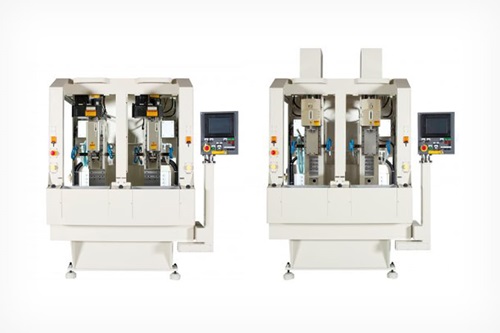
Source: NISSIN ProSOL official website https://mktg.nissin-mfg.co.jp/product/gseries/
This honing machine synchronizes stroke and stone expansion in 0.01 μm increments, enabling precision honing of holes as small as 3 mm in diameter and 80 mm deep, even in hard materials.
Automatic electronic control and made-to-order jigs reproduce the techniques of veteran operators.
These honing machines eliminate deviations in the manufacturing of precision components such as control valves while also reducing personnel costs.
| Bore Diameter |
⌀3~⌀100 |
|---|---|
| Workpiece Length |
130mm |
| Spindle Stroke Length |
Max. 300mm |
Main Applications
Gears / Connecting rods / Hydraulic valves, etc.
For
large components and heavy industry
large components and heavy industry
VL Series
Nagel
Nagel
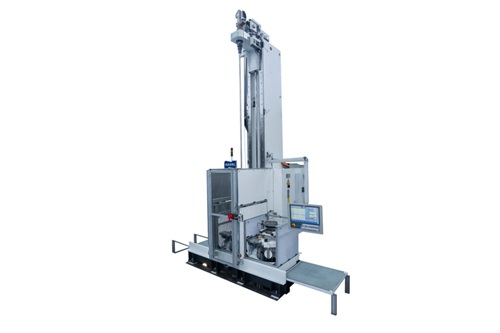
Source: Nagel official website https://nagel.com/en/products/honing/honing-machines/tube/
Machine height can be reduced through pit installation, reducing the footprint and using less volumetric space. It also makes it easy to mount and unmounts heavy objects such as engine blocks, reducing the operation workload.
They can even cut the large machining allowances unique to heavy industry in short amounts of time.
| Bore Diameter |
~⌀350 |
|---|---|
| Workpiece Length |
3,800mm |
| Spindle Stroke Length |
Not specified on official website |
Main Applications
Long pipes and tubes / Piston rods / Heavy workpieces / Exterior diameter processing, etc.
For
parts repairs and processing-on-consignment
parts repairs and processing-on-consignment
SV Series
Sunnen
Sunnen
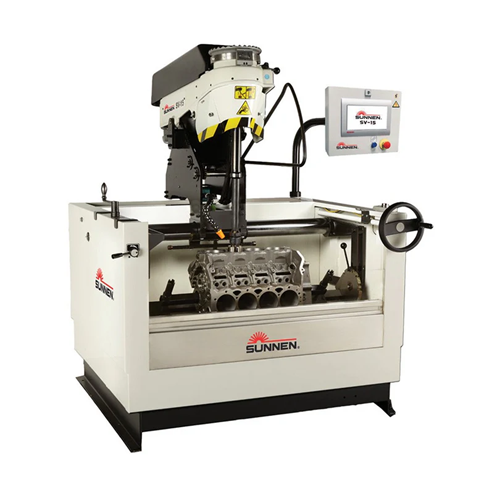
Source: Sunnen official website https://sunnen.com/products/sv-15-vertical-honing-machine
A graph showing the status of the hole being honed is displayed on-screen, in real time. This makes it easy to visually understand where the workpiece is and how it is warped, accelerating repair decisions.
These systems can store up to 100 processing settings at any time. They can also be backed up via USB, so even for small-lot, high-mix jobs, you can instantly reproduce the same processing as in previous jobs. They also shorten set-up times.
| Bore Diameter |
~⌀203 |
|---|---|
| Workpiece Length |
279mm |
| Spindle Stroke Length |
~225mm |
Main Applications
Engine blocks, etc.